
Your Trusted Whittier Dentist
Your Trusted Whittier Dentist
See the Real Results Our Patients Love
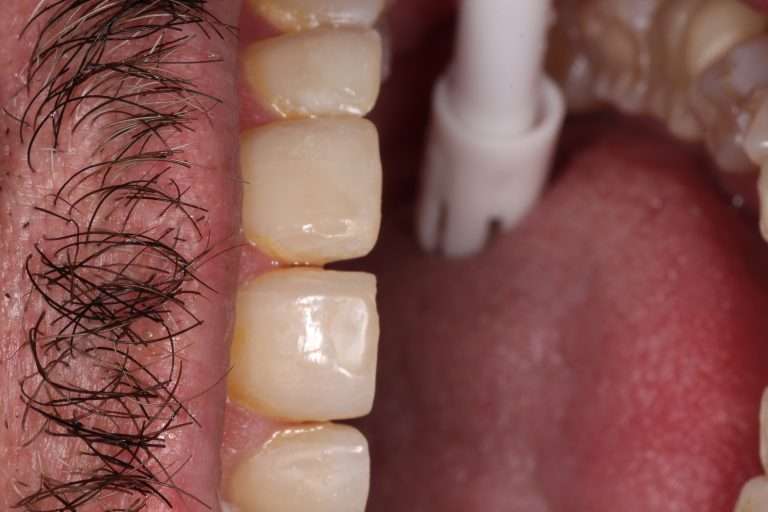
In the before photo (top), the patient’s upper central incisors displayed visible chipping and enamel loss, particularly along the biting edges. One front tooth had a significant portion of the incisal edge missing, while the other showed smaller chips and irregular contours. There was also noticeable surface wear, including flattened areas from repeated contact, and mild staining near the gumline that made the damage more apparent. The uneven lengths of the teeth disrupted symmetry, while the worn edges softened the natural definition of the smile. These structural issues not only affected the patient’s appearance but also left the teeth more vulnerable to further wear and fracture.
In the after photo (bottom), the teeth were restored using high-quality composite bonding. This minimally invasive treatment involved carefully layering tooth-colored resin to replace the missing enamel and reshape the teeth to their ideal proportions. The bonding was meticulously contoured to match the natural anatomy, ensuring smooth transitions between the restoration and the surrounding tooth surface. The color was blended to match the patient’s natural enamel, with attention given to maintaining translucency at the edges for a lifelike appearance. After shaping, the restorations were polished to a high gloss, enhancing both aesthetics and resistance to staining.
By restoring the proper length, shape, and alignment of the central incisors, the treatment not only improved the patient’s smile but also strengthened the teeth against future wear. The outcome is a balanced, natural look that improves both function and appearance, allowing the patient to smile and bite with renewed confidence.


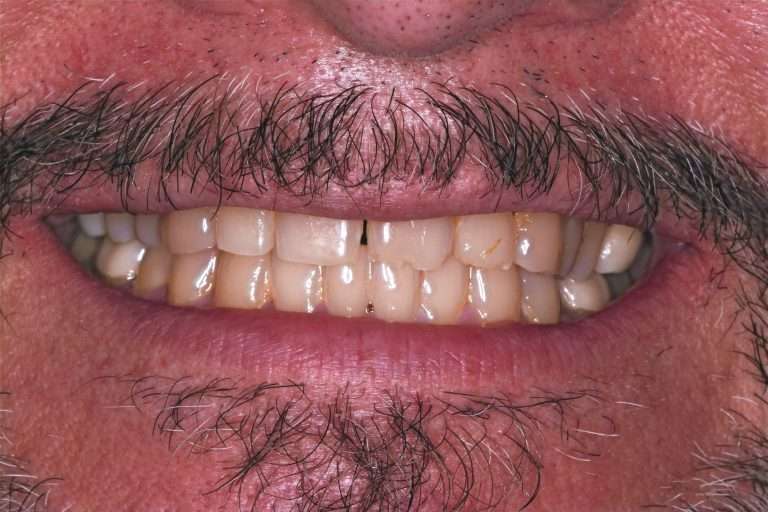
In the before photo (top), the patient’s upper front teeth presented with multiple concerns affecting both function and aesthetics. The right central incisor had a visible vertical fracture line running from the biting edge toward the gumline, accompanied by surface wear. Several teeth also showed small chips and irregular incisal edges, creating asymmetry in the smile. The fracture line was slightly darker than the surrounding enamel, which, combined with mild staining in adjacent areas, made the damage stand out even more. These structural issues not only affected the smile’s appearance but also indicated a potential risk of the fracture deepening or leading to further breakage over time.
In the after photo (bottom), the teeth were restored using meticulous composite bonding techniques. A tooth-colored resin, carefully shade-matched to the patient’s natural enamel, was applied to rebuild the missing structure and mask the fracture line. The material was layered to recreate the natural translucency and subtle color variations found in healthy front teeth, ensuring the restoration blended seamlessly. Special attention was given to recontouring the biting edges of the central incisors and adjacent teeth, restoring symmetry and improving overall smile balance. After shaping, the restorations were polished to a high gloss, not only improving aesthetics but also making the surfaces more resistant to staining and plaque buildup.
By repairing the fracture and restoring proper contours, this treatment significantly improved the patient’s smile while reinforcing the structural integrity of the affected teeth. The end result is a natural-looking, balanced smile that functions well, resists future wear, and allows the patient to speak and smile with renewed confidence.


See what’s possible with advanced cosmetic and restorative dentistry. Schedule your consultation today and start your own before-and-after story.